
GST Year-End Checklist for Financial Year 2025-2026: 10 Must-Do Actions
As Financial Year 2025-26 draws to a close, there’s a familiar rush that sets in for most businesses.

As Financial Year 2025-26 draws to a close, there’s a familiar rush that sets in for most businesses.
Accounts teams are closing books. Management is reviewing numbers. And somewhere in the middle of it all, GST compliance quietly becomes the most critical task before 31 March 2026.
If you’ve ever received a GST notice because of a small mismatch or missed reconciliation, you already know year-end GST compliance is not just a routine exercise. It’s your last opportunity to fix errors before they become disputes. Many businesses also consult a tax consultant in Gurgaon during this time to review records and ensure everything is properly aligned.
That’s why a structured GST Checklist for Financial Year 2025-2026 is essential.
Under the CGST Act and broader GST law, compliance does not end with monthly or quarterly return filing. The end of the financial year is when businesses must pause, review, reconcile, and correct. Many businesses also consult a GST consultant in Gurgaon to ensure that reconciliations and corrections are handled properly before the year closes.
This practical and human-focused GST year-end compliance checklist for FY 2025-26 walks you through 10 important GST actions every business must complete before stepping into FY 2026-27.
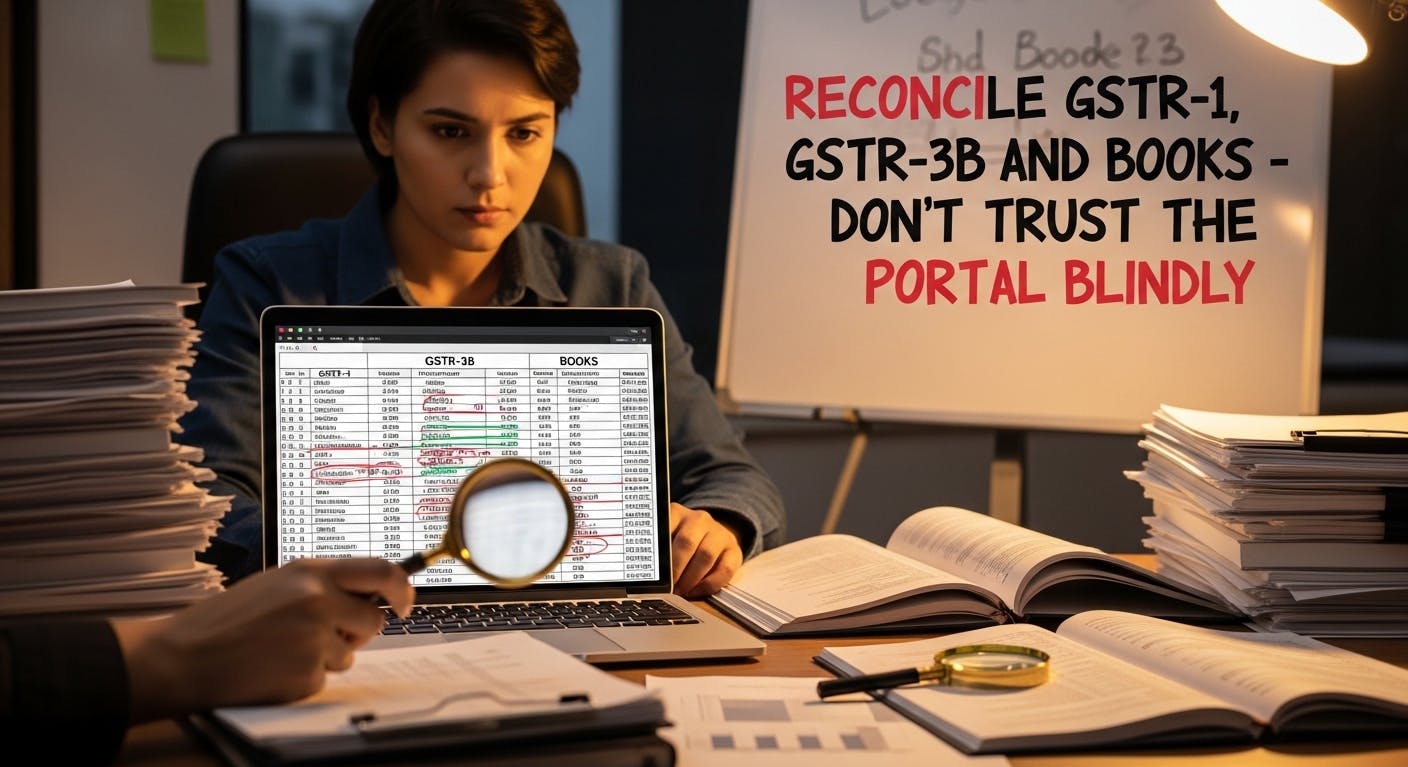
One of the most common mistakes businesses make is assuming that if the data is visible on the GST portal, it must be correct.
It isn’t always.
You must reconcile:
Even small mismatches can snowball into compliance issues later and may affect your GST return filing requirements.
A proper reconciliation ensures:
Before March 2026 ends, sit with your accounts team and actually verify numbers line by line. It saves months of future stress.
Read more: Skyrocket Your Savings By Learning About Input Tax Credit Under GST
If there’s one area where businesses unknowingly expose themselves, it’s Input Tax Credit (ITC).
Many assume that if ITC is visible in GSTR-2B, it is safe to claim. That’s not always true per GST regulations.
As part of your GST compliance checklist for FY 2025-26, ask:
Incorrect ITC claims can attract interest and penalty, even if the mistake was unintentional.
Before FY 2025–26 draws to a close, review ITC like an auditor would not like an optimist would.

Reverse Charge Mechanism under GST is often forgotten until a notice arrives.
Non-payment of GST under RCM is a frequent reason for departmental queries.
Check whether:
If GST is payable under reverse charge, it must be paid - you cannot pay GST under forward charge instead.
If there was a reason for non-payment of GST, document it clearly.
RCM mistakes are easy to make and equally easy to prevent with a year-end compliance review.

Growth is good for business. But it can silently change your GST compliance obligations.
Check whether your aggregate turnover in Financial Year 2025-26:
Many businesses continue under old assumptions and forget that compliance requirements change with turnover.
As FY 2025-26 draws to a close, verify whether your current GST structure still fits your size.
Recommended: Draft a Professional GST Show Cause Notice(SCN) Reply Letter Format in Word

If you are under the GST Composition Scheme, year-end is the right time to evaluate:
If you plan on opting to pay GST under regular scheme in April 2026 (FY 2026-27), plan early.
Transition impacts pricing, input tax credit availability, and compliance burden.
Year-end planning prevents confusion in the new financial year.

If you export goods or services without payment of IGST, filing the Letter of Undertaking (LUT) is critical.
Before stepping into FY 2026-27:
Failure to renew LUT means IGST may become payable on exports.
It’s a small compliance step but missing it can disrupt cash flows significantly.

There is psychological comfort in closing the financial year with zero pending dues.
Before 31 March 2026:
Even a small unpaid amount can trigger automated compliance issues on the GST portal.
Close the year clean.
Read more: Confused About Which ITR Form NRIs Should File? Here's a Simple Guide
E-invoicing compliance has become a critical GST requirement.
Verify:
Incorrect e-invoicing can impact customers’ ITC claims and damage business relationships.
Year-end GST compliance is also about protecting your reputation.
Before finalizing books for FY 2025–26:
Errors in place of supply can result in paying tax under the wrong head.
These issues often go unnoticed until audits unless checked during year-end compliance.

Ask yourself honestly:
If a GST audit notice arrives tomorrow, are your compliance records ready?
Ensure documentation includes:
GST compliance obligations extend beyond filing. Documentation protects you under GST law.
Recommended: An Easy Guide By DSRV India: How To Register A Startup In Gurgaon

As Financial Year 2025-26 draws to a close, also:
A structured compliance check list for FY 2025-26 ensures nothing important is missed.
GST is not just about tax payment. It is about demonstrating compliance.
Many disputes under GST arise not because businesses intended to evade tax but because they did not conduct a proper year-end GST compliance review.
A thoughtful GST Checklist for Financial Year 2025-2026 helps you:
Many businesses also consult a GST consultant in Gurgaon during the year-end review to ensure reconciliations and compliance checks are properly completed.
When 2025-26 draws to a close, take a moment to pause and ask:
Have we truly ensured compliance or have we just filed returns?
Because under the Goods and Services Tax regime, prevention in March 2026 is far easier than litigation in 2027.
A careful GST year-end compliance checklist for FY 2025-26 is not just about ticking boxes.
It’s about closing the financial year with confidence.

POEM decides whether your foreign company is taxed in India on its global income. The ₹50 crore threshold, the ABOI test, and how to keep your position defensible.

Received a transfer pricing adjustment from the TPO? The grounds that actually work, the comparables arguments, and how to cut the number down on substance
Missed a tax appeal deadline? Get every GST and income tax appeal time limit, form, fee and pre-deposit rule for 2026 in one simple checklist.
